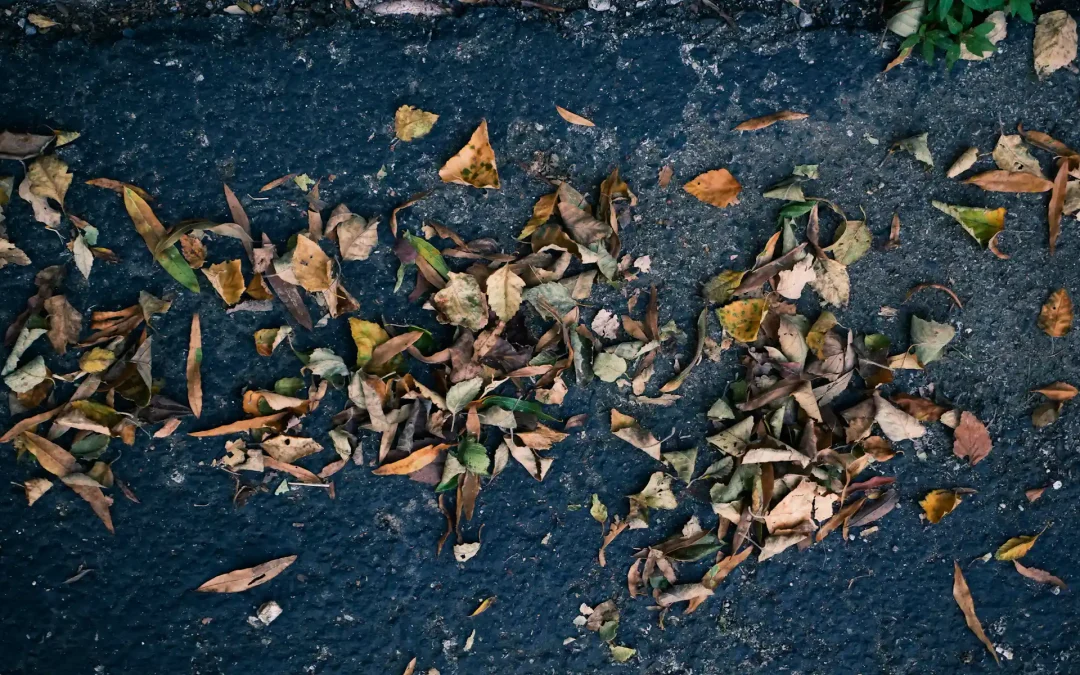
Fall is the best time to schedule driveway cleaning on Long Island. Leaves are beginning to collect under mature trees in Nassau and Suffolk County. Shaded areas remain damp because of coastal humidity. Salt air, rain, and organic debris add more moisture to the surface.
These conditions allow stains, moss, algae, and black streaks to develop before winter. Cleaning the driveway before the first frost removes the buildup while temperatures still allow the surface to dry properly.
Why Wet Leaves Damage Asphalt and Concrete
Wet leaves do more than make a driveway look untidy. They create a layer that holds moisture against the pavement.
As leaves break down, they release tannins and other organic compounds. These compounds can leave brown, yellow, or black stains on concrete. Dirt and grit become trapped beneath the leaves. Foot and vehicle traffic then press the material into the pores.
Concrete is porous. Water and contaminants can enter through small openings. Repeated wetting and drying can contribute to surface discoloration and etching. Decomposing leaves can also make existing surface wear easier to see.
Asphalt reacts differently. It contains a bituminous binder that can age when exposed to prolonged moisture, standing water, traffic, and temperature changes. Wet leaves can leave tannin stains and trap grit against the surface. They can also conceal cracks and areas where the asphalt is beginning to break down.
Leaves do not affect asphalt and concrete in exactly the same way. Concrete may show chemical staining and surface etching. Asphalt is more vulnerable to moisture retention, raveling, cracking, and damage from incorrect pressure.
Remove leaf buildup before it remains on the driveway for weeks.

Moss and Algae Grow in Shaded Long Island Driveways
Many Long Island driveways are surrounded by trees, shrubs, and landscaping. North-facing driveways may receive limited direct sunlight. Areas beneath trees can remain wet after rain.
These conditions support moss, algae, and mildew growth.
Moss often appears as a green or yellow-green layer. It can grow along driveway edges, in cracks, near retaining walls, and beneath parked vehicles. Algae may create a green, gray, or dark film. Mildew and organic residue can produce black or brown discoloration.
Coastal humidity can extend drying times. Salt air adds another contaminant that can remain on the surface after rain or winter treatment. Leaves make the problem worse by blocking airflow and holding water in place.
Moss and algae can also create a slip hazard on nearby walkways and sloped driveway areas. Pressure alone may remove the visible growth without treating the remaining organic material. A suitable pre-treatment and post-treatment can help slow regrowth.
What Are the Black Streaks on a Driveway?
Black streaks can have several causes. The appearance alone does not identify the contaminant.
Common causes include:
- Algae or mildew.
- Tannin residue from leaves.
- Tire marks and rubber transfer.
- Oil or grease.
- Dirt embedded in concrete pores.
- Water runoff from landscaping or gutters.
- Organic growth in cracks and expansion joints.
A professional should inspect the surface before selecting a cleaning method. Organic growth requires a different treatment from oil. Rust, mineral deposits, and old discoloration may also require separate products.
Do not assume that increasing pressure will solve every black streak. High pressure can spread oil, strip asphalt binder, etch concrete, or leave visible wand marks.
Why Clean Your Driveway Before Winter?
Long Island winter weather creates repeated freeze-thaw cycles. Water enters cracks, pores, and gaps in the pavement. When temperatures drop, that water freezes and expands. When temperatures rise, the ice melts.
The process repeats throughout winter.
Contaminants that hold moisture against the pavement increase the amount of water that remains on the surface. Existing cracks can become more visible after repeated freezing and thawing. Concrete may develop scaling, spalling, or additional surface deterioration. Asphalt may develop wider cracks, loose aggregate, and worn areas.
Driveway cleaning does not repair structural damage. It does remove leaf residue, organic growth, dirt, and other contaminants before winter. Cleaning also gives you a clearer view of cracks, drainage problems, and areas that may need repair or sealing.
Review additional concrete cleaning guidance before winter before scheduling service.
What Professional Driveway Cleaning Involves
A complete driveway cleaning process should include more than a quick pass with a pressure-washing wand.
1. Surface inspection
The technician should identify the surface material and its condition.
The inspection should check for:
- Asphalt, concrete, or pavers.
- Cracks and loose sections.
- Moss, algae, and mildew.
- Oil, rust, and leaf stains.
- Damaged expansion joints.
- Drainage concerns.
- Nearby plants, siding, brick, and doors.
A driveway in good condition can handle a different cleaning method from an older or damaged surface.
2. Pre-treatment
Pre-treatment loosens contaminants before the main rinse.
Organic growth may require a suitable cleaning solution with enough dwell time to work. Oil and grease may require a concrete-safe degreaser. Leaf stains may need an appropriate treatment for organic discoloration.
The technician should protect surrounding landscaping and rinse nearby plants as needed. The cleaning solution should match the material and the type of buildup.
3. Surface cleaning
A professional surface cleaner uses rotating spray bars inside a round housing. It distributes water across a consistent area.
This helps reduce:
- Striping.
- Circular marks.
- Uneven cleaning.
- Missed sections.
- Excessive pressure in one location.
A wand remains useful around edges, steps, joints, and tight areas. A surface cleaner is usually more consistent for large, flat driveway sections.

4. Pressure adjustment
Asphalt and concrete require different treatment.
Asphalt driveway cleaning
Use controlled pressure on asphalt. Excessive pressure can remove loose aggregate, damage the binder, or expose weak areas. The technician should avoid concentrating the spray on cracks and deteriorated edges.
Chemical action and moderate pressure can provide a safer approach than aggressive blasting.
Concrete driveway cleaning
Sound concrete generally tolerates more pressure than asphalt. However, damaged, decorative, stamped, painted, or older concrete may require a lower setting.
A professional should adjust pressure based on the condition of the slab. More pressure is not always better. Excessive pressure can etch the surface, damage joints, and create uneven cleaning patterns.
JMS Pressure Wash explains the difference between cleaning methods in its guide to soft washing versus pressure washing.
5. Post-treatment and final inspection
A post-treatment can help address remaining organic growth after the main cleaning step. The technician should complete a thorough rinse and inspect the driveway for missed sections.
Ask for a final review of the edges, joints, corners, and areas beneath trees. These sections often retain the most buildup.
DIY Driveway Cleaning Versus Professional Service
Homeowners can remove loose leaves with a broom, blower, or garden hose. Regular leaf removal is useful between professional cleanings.
A rented pressure washer creates more risk when the driveway has heavy organic growth, oil, cracks, or surface deterioration. Common DIY problems include:
- Using excessive pressure.
- Holding the nozzle too close.
- Cleaning with a narrow spray tip.
- Creating visible stripes.
- Damaging asphalt.
- Removing joint sand from pavers.
- Spreading oil across the surface.
- Allowing cleaning chemicals to reach plants or storm drains.
DIY cleaning may be suitable for light surface dirt on a small, sound area. Consider professional driveway cleaning when the surface has moss, algae, black streaks, deep stains, or visible damage.
Review JMSP Wash power washing photos to see examples of exterior cleaning work.
The Best Fall Window for Driveway Cleaning
Schedule driveway cleaning in early or mid-fall, before consistent overnight freezing begins. The exact timing varies by location and weather. Long Island homeowners should plan around falling leaves, daytime temperatures, rain, and the first frost.
Do not wait until winter to remove organic growth. Cleaning equipment and water can be difficult to use during freezing conditions. Cold temperatures also slow drying and may prevent some treatments from working as intended.
Use this fall checklist:
- Remove loose leaves and branches.
- Check the driveway for cracks and standing water.
- Look for green growth in shaded areas.
- Note black streaks, oil spots, and tire marks.
- Schedule cleaning before the first frost.
- Ask how the company will protect nearby landscaping.
- Confirm that pressure will be adjusted for asphalt or concrete.
- Ask whether pre-treatment and post-treatment are included.
Schedule Driveway Cleaning on Long Island
Fall driveway cleaning removes leaf residue, moss, algae, black streaks, and embedded dirt before winter conditions arrive. It also helps you identify cracks and surface problems before freeze-thaw cycles begin.
JMS Pressure Wash serves Long Island homeowners and businesses with exterior cleaning services. Homeowners in Nassau County can visit the JMSP Wash Nassau County service page. Customers throughout Long Island can request a free quote or call or text 516-667-8110.
Schedule now while temperatures remain suitable for cleaning and drying.