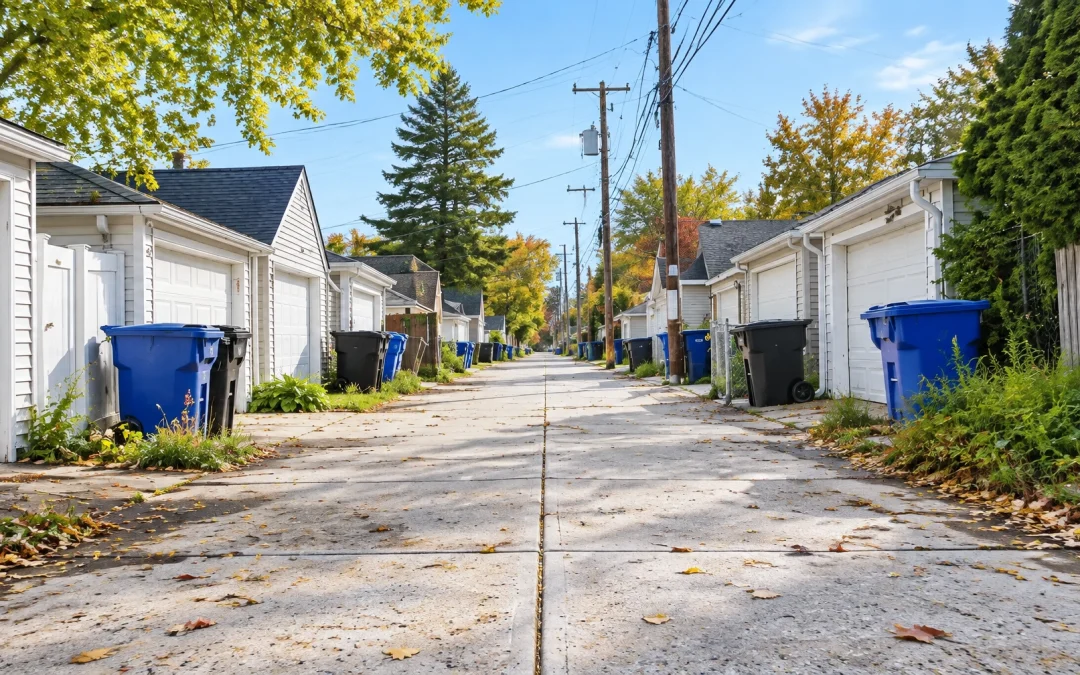
Welcome. If leaves have been sitting on your concrete driveway, brown or dark marks may remain even after you sweep them away. Late October can be a useful time to arrange driveway cleaning: much of the leaf drop has happened, but the cold, wet stretch of late fall and winter is still ahead.
Why leaves leave stains on concrete
Leaves, acorns, and other plant debris release tannins and other organic material as they break down. Water carries some of this material onto the driveway. Because concrete is porous, pigment can settle into the surface instead of rinsing away with the next rain.
The result may appear as brown, rust-colored, or dark patches. The pattern often follows where leaves have gathered: beneath a tree, along the driveway edge, near a curb, or in a damp spot where debris collects.
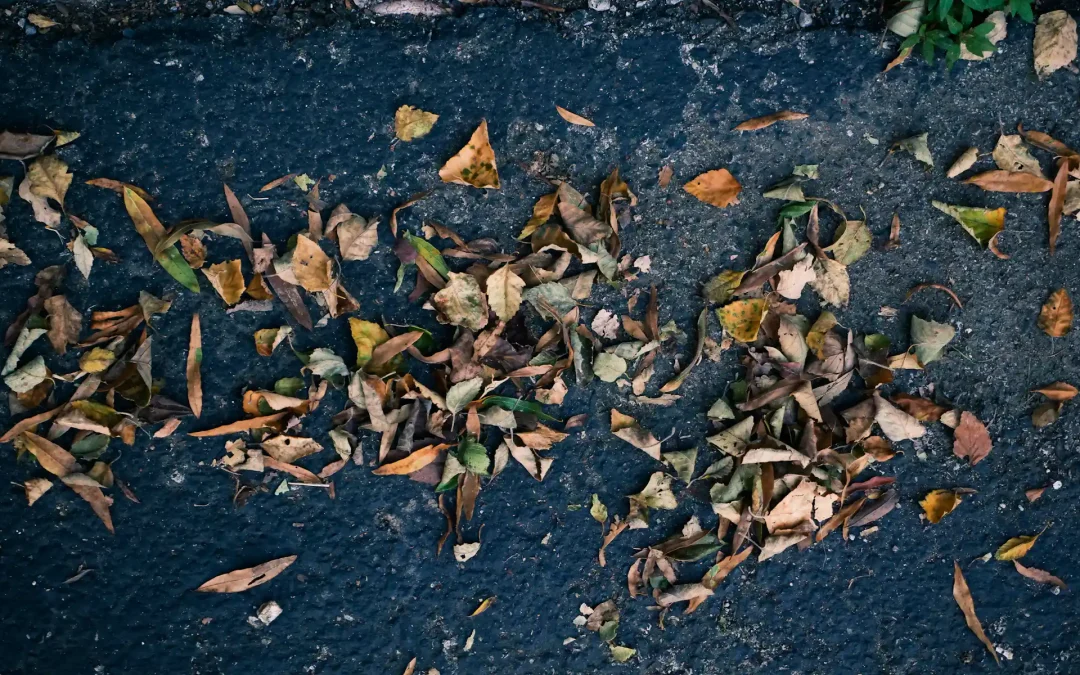
Leaf stains are not the only fall buildup. Wet organic debris can hold moisture against concrete. Shaded areas that stay damp may also develop green algae or dark biological film. Long Island’s humid coastal air and tree-lined suburban streets can keep these spots from drying quickly, especially where sunlight and airflow are limited.
A prompt sweep removes leaves before they sit and decompose. It does not always remove a stain that has already formed.
Why late October is a practical cleaning window
The timing is about working conditions, not a fixed date on the calendar. A mild, dry day gives the driveway time to be cleaned, rinsed, and dry. As November brings colder weather, rain, and the start of Nor’easter season, suitable days can be less predictable.
The National Weather Service’s Islip November climate normals show that average temperatures decline through the month. Freezing weather can arrive earlier or later depending on the year and location, so check the forecast for your own area before scheduling.
A professional can assess whether conditions are suitable for the cleaning method and products required. If rain or freezing temperatures are expected, rescheduling may be the better option. Cleaning is not a reason to rush through a job in poor conditions.
What professional driveway cleaning involves
A driveway with leaf stains may need more than a rinse. An effective process starts by identifying what is on the surface and selecting an approach that addresses it without relying on excessive pressure.
1. Inspect the surface and remove loose debris
The technician checks the driveway’s condition, stain patterns, shaded sections, edges, and joints. Concrete that is worn, cracked, patched, or decorative may need different handling from sound, standard concrete.
Leaves, acorns, and other loose debris are cleared before cleaning. This helps reveal which marks are loose dirt and which are persistent stains.
2. Pre-treat organic growth
Green algae or dark organic film may respond to a suitable cleaning treatment before the surface is washed. The product and application should match the material and the conditions. Nearby plants and sensitive surfaces should be protected, and runoff should be managed appropriately.
Tannin discoloration is different. A general rinse or an organic-growth treatment may not remove a brown leaf shadow. Persistent marks can call for a separate, surface-appropriate stain treatment. A qualified cleaner can determine what is suitable and whether a test spot is needed.
Do not mix household cleaning products or apply an untested chemical to concrete. In particular, never combine bleach-based cleaners with acids or other products.
3. Clean evenly with the right equipment
For a broad, flat concrete area, a professional may use a rotary surface cleaner. It distributes cleaning across a wider path and helps avoid the uneven appearance that can result from moving a narrow spray wand inconsistently.
A wand can still be useful for edges, corners, and targeted areas. Using it too close to the surface or holding it in one spot can leave marks or damage concrete. More pressure is not automatically a better way to remove a stain.

4. Detail the edges and rinse fully
The driveway perimeter, joints, and areas near landscaping can hold debris that a wide surface-cleaning pass does not reach. These areas need appropriate detail work.
A thorough final rinse removes loosened dirt and cleaning residue. The technician should also consider where the water flows and avoid directing runoff toward vulnerable planting beds or other sensitive areas.
What rinses out, and what may need treatment?
Loose leaves, soil, and surface grime often come away with sweeping and washing. Algae or mildew-like film may respond to a treatment intended for organic growth. Brown or orange marks that remain after cleaning may be tannin staining, which can require a different treatment.
The age and depth of the stain matter. So do the concrete’s porosity, finish, and maintenance history. Some stains lighten substantially; older or deeply set discoloration may not disappear completely. A realistic assessment is more useful than a promise that one wash will erase every mark.
For a closer look at how cleaning methods vary by surface, see JMS Pressure Wash’s guide to soft washing versus pressure washing. You can also view the company’s power washing photos.
Quick checks: is your driveway a fall-cleaning candidate?
Walk the driveway and check the following:
- Look beneath trees and leaf piles. Note brown or rusty shadows where leaves or acorns have rested.
- Check shaded sections. Look for green film or dark patches that stay damp after rain.
- Notice where water sits. Low areas and edges that remain wet may collect debris and staining.
- Compare the marks. If loose debris is gone but discoloration remains, it may need targeted treatment rather than a rinse alone.
- Check the forecast. Choose a suitable dry window and avoid scheduling when freezing conditions are expected during cleaning or drying.
If the concrete is crumbling, badly scaled, or visibly damaged, point that out before work begins. The cleaning approach should account for the surface condition.
Keep new stains from setting in
You do not need a complicated maintenance routine. Remove leaf piles and acorns regularly, especially after wind or rain. Clear debris from damp driveway edges. Check shaded areas where moisture may linger.
If a new stain appears, remove the leaves and rinse the spot when conditions allow. A quick response may make the mark easier to address than one left through repeated wet weather. Do not use a concentrated spray or untested cleaner as a shortcut; either can damage concrete or nearby materials.
Book driveway cleaning before the weather turns
For homeowners in Nassau and Suffolk County, this late-fall window can be a practical opportunity to address leaf and organic staining before winter weather limits scheduling. The right result depends on identifying the stain, choosing an appropriate treatment, and cleaning the driveway evenly.
JMS Pressure Wash offers driveway and sidewalk cleaning. Request a free quote and include your town, the approximate driveway size, and whether you see brown leaf marks, green growth, or both. Photos can also help describe the area.