Late October is a useful time to inspect and clean concrete before winter temperatures arrive. On Long Island, driveways, walkways, and patios face repeated wet and freezing weather. Existing cracks and areas that stay damp can be especially vulnerable.
Cleaning removes surface buildup that can hold moisture against concrete. It also makes cracks and early surface damage easier to see. Cleaning does not repair cracks or prevent all freeze-thaw damage, but it can be a practical first step before winter.
How freeze-thaw cycles affect concrete
Concrete contains small pores. Water can enter those pores, joints, and existing cracks. When water freezes, it expands and creates pressure inside the concrete. Repeated cycles can contribute to cracking, surface scaling, or spalling. The loss of small pieces or flakes from the surface.
The American Concrete Institute’s overview of freezing and thawing explains that concrete’s moisture condition is an important part of freeze-thaw distress. The Federal Highway Administration’s guidance on concrete cracking also describes moisture-related deterioration and damage that may appear around cracks and joints.
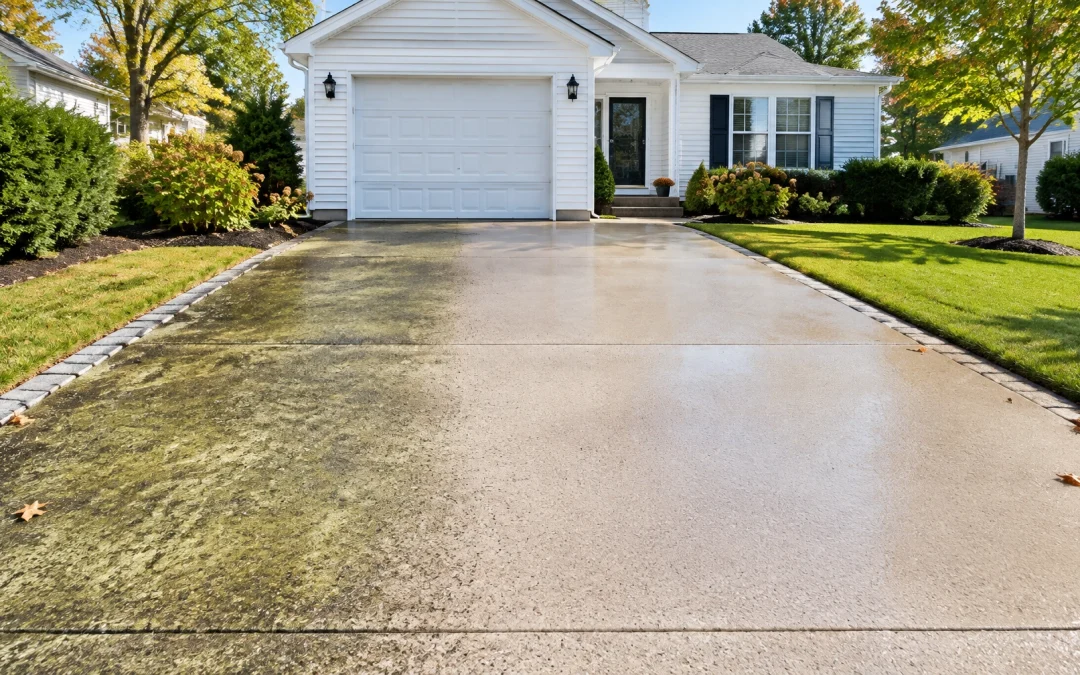
Dirt and organic growth do not automatically cause structural damage. However, moss, algae, and accumulated grime can keep parts of a surface damp for longer. Cracks and open joints can give water a route into the concrete. Cleaning removes surface contamination so the slab can dry more readily and its condition can be assessed.
Why Long Island concrete can stay damp
Long Island’s coastal climate brings humid conditions, rain, and seasonal temperature changes. Shaded concrete, north-facing areas, and surfaces beside gardens or trees may dry more slowly. Those damp conditions can support algae and moss growth.
Winter brings freezing temperatures and repeated thaw periods. A wet driveway or walkway may freeze overnight, thaw during the day, and freeze again. If the concrete already has cracks or damaged areas, water may enter and contribute to continued deterioration.
This is why late-fall cleaning can be useful: it removes growth and grime before winter, while there may still be a suitable window for the concrete to be washed and dry. It is not a substitute for repairs, drainage improvements, or sound concrete construction.
Signs your concrete needs attention now
Check the driveway, front walk, side path, patio, and concrete steps. Look for:
- Dark staining or a dirty film that remains after rain.
- Green or black patches on shaded or persistently damp areas.
- Moss in joints, edges, or cracks.
- Small visible cracks that may collect water.
- Flaking or scaling spots where the surface is already breaking away.
- Areas that stay wet long after nearby concrete has dried.

Small cracks do not all indicate serious structural problems. But note their location and condition before cleaning. If a crack is widening, the surface is loose, or pieces are breaking away, arrange an assessment before applying high pressure. Washing can expose damage; it cannot reverse it.
How professional concrete cleaning works
The cleaning method should match the concrete’s condition and the type of buildup. Using more pressure is not a reliable solution. A concentrated or poorly controlled spray can mark the surface, remove weak material, or worsen existing damage.
A professional process typically includes these steps:
- Inspect the surface. Check for open cracks, loose material, scaling, decorative finishes, nearby landscaping, and places where water drains or pools.
- Treat organic growth as needed. Algae and moss may need a suitable pretreatment so the cleaner can address the growth without relying on an overly forceful spray.
- Clean broad areas evenly. A surface-cleaning attachment can help maintain a consistent cleaning pattern on large, sound concrete areas. Use care around edges, joints, steps, and damaged spots.
- Rinse thoroughly. Remove loosened soil and cleaning solution from the concrete and adjacent areas.
- Check the result. Once visible buildup is removed, inspect the surface again for cracks, scaling, or spalling that may have been hidden.
Soft-wash methods use cleaning solutions at lower pressure to address organic growth. They may be used for pretreatment or on nearby delicate materials. Concrete cleaning may also use controlled mechanical pressure on suitable surfaces. The choice depends on the surface and its condition. See JMS Pressure Wash’s overview of soft washing and pressure washing.

Avoid washing when temperatures are near freezing or when the concrete will not have time to dry before a freeze. The specific timing depends on the weather, shade, drainage, and surface condition. If the slab is already deteriorating, do not assume that a standard pressure-washing approach is appropriate.
What a fall concrete cleaning includes
The work area and buildup determine the exact scope. A fall cleaning may include:
- A visual check of the driveway, walkway, or patio before washing.
- Removal of loose dirt and surface debris.
- Pretreatment where algae, moss, or similar organic buildup is present.
- Even cleaning of suitable concrete areas.
- Careful rinsing of the surface and adjacent areas.
- A final visual check for newly visible cracks or surface deterioration.
A clean surface is easier to inspect, but it does not confirm that the concrete is structurally sound. If washing reveals open cracks, loose sections, or flaking, address those issues separately with an appropriate concrete professional.

What about sealing?
Sealing may be worth discussing after cleaning, but it is not a required part of every cleaning job. The concrete needs to be suitable for treatment, clean, and adequately dry. Existing damage may need repair first, and product selection should fit the surface and its condition.
The ACI guide to selecting protective treatments for concrete provides technical guidance on protective treatments. Ask a qualified professional whether sealing makes sense for your concrete and what preparation and drying time would be needed. Do not use a sealer to cover active deterioration or assume it will repair cracks.
Clean before winter, then inspect
For homeowners in Nassau and Suffolk County, the remaining fall window can help remove moisture-holding surface growth and reveal concrete issues before winter. Schedule cleaning while conditions allow for a thorough rinse and drying period. If you already see cracks or flaking, make sure the surface is assessed and cleaned with its condition in mind.
JMS Pressure Wash provides exterior cleaning services for Long Island properties. Visit the Nassau County service page or request a free quote for your driveway, walkway, or patio.