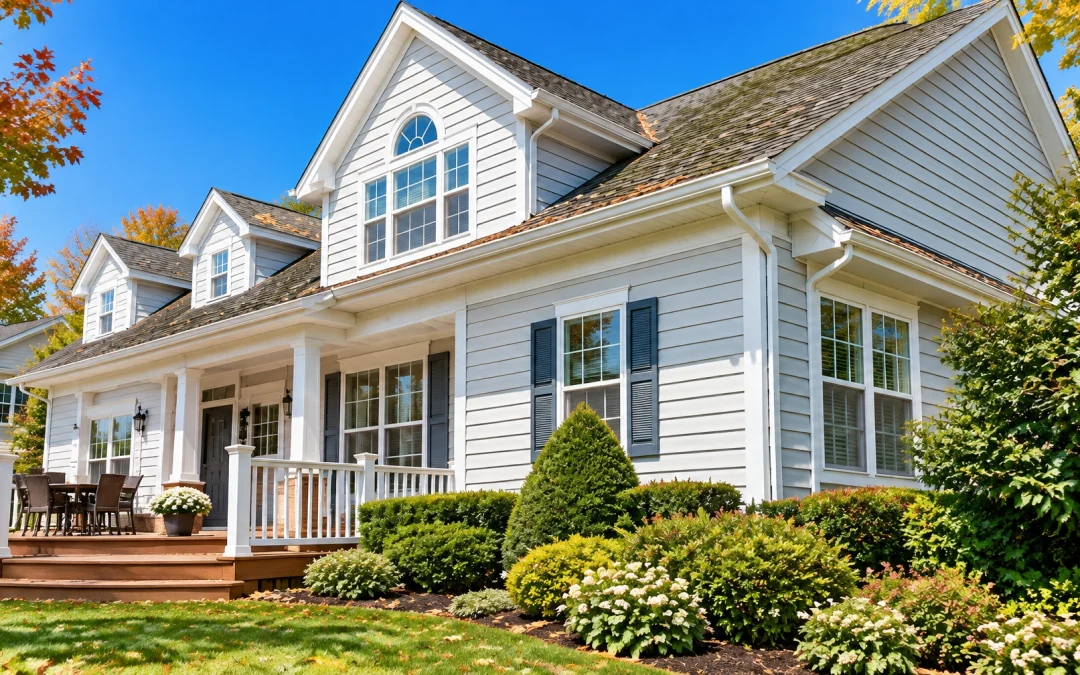
October creates the conditions that allow algae, mildew, moss, and organic residue to remain on Long Island homes.
Cooler nights reduce evaporation. Rain keeps siding, roofs, and decks damp. Falling leaves block sunlight and hold moisture against exterior surfaces. Shaded walls and north-facing roof sections can stay wet for extended periods.
This is why fall is a practical time to schedule exterior cleaning.
A professional soft washing company uses low pressure and cleaning solutions to treat organic growth without relying on force. This method is commonly used for vinyl siding, painted wood, stucco, asphalt shingles, and decks.
Why Fall Growth Increases on Long Island Homes
Long Island homes receive moisture from rain, coastal humidity, irrigation, and storm runoff. Mature trees add shade and organic debris. These conditions become more noticeable in October.
According to National Weather Service climate data for Islip, October has an average high near 66.5°F, an average low near 50.2°F, and measurable rain on approximately seven days. The month can also experience freezing temperatures, which makes the cleaning window weather-dependent.
Common fall growth factors include:
- Reduced sunlight on shaded walls
- Wet leaves resting on decks and roofs
- Algae growth on damp siding
- Mildew around gutters and windows
- Moss on shaded roof sections
- Pollen and soil residue from summer
- Salt film from coastal air
- Organic debris trapped in siding seams and deck joints
Growth often begins in small areas. It can spread when moisture remains trapped against the surface.
Cleaning before winter removes the organic film and exposes problems such as failed caulk, loose siding, damaged shingles, peeling paint, and deteriorated deck boards.
What a Soft Washing Company Does Differently
Soft washing uses three basic steps:
- Apply a surface-appropriate cleaning solution.
- Allow the solution to remain on the surface for a controlled dwell time.
- Rinse with low pressure.
The cleaning solution helps break down algae, mildew, moss, dirt, and other organic residue. The rinse removes the loosened material.
The process does not depend on a concentrated water stream hitting the surface at high velocity. This reduces the risk of forcing water behind siding, removing roof granules, stripping paint, or damaging wood fibers.
A professional soft washing company should first identify the material and its condition. The same cleaning method should not be used on every part of a home.
The crew should also:
- Test an inconspicuous area when appropriate
- Protect plants and outdoor fixtures
- Pre-wet nearby landscaping
- Cover or avoid sensitive electrical components
- Use the correct solution dilution
- Keep runoff away from vulnerable areas
- Rinse plants and surrounding surfaces
- Check the forecast for drying and freezing conditions
Cleaning solutions must be handled carefully. Some products can irritate skin and eyes or damage plants, metals, and finishes when they are mixed, applied, or rinsed incorrectly.

Which Long Island Surfaces Need Soft Washing in Fall?
Vinyl Siding
Vinyl siding commonly develops green algae, gray film, black mildew spots, and dirt streaks below gutters or windows.
Soft wash siding cleaning uses controlled pressure to reduce the risk of water entering behind the panels. High pressure can force water upward into seams, laps, trim, and penetrations.
Water behind siding may not be visible immediately. Moisture can remain behind the panels and contribute to staining, mold, or deterioration of sheathing and framing.
Low pressure also helps protect older siding, loose panels, caulk lines, and fragile trim.
Painted Wood
Painted wood siding and trim can hold moisture in the grain. Shade and leaf contact make mildew more likely during fall.
High pressure can:
- Strip paint
- Raise wood fibers
- Create grooves in soft areas
- Remove protective coatings
- Force water into joints
A soft washing approach can remove organic growth with less mechanical impact. The technician should still inspect for peeling paint, exposed wood, rot, and failed joints before cleaning.
Stucco and Textured Exterior Walls
Stucco has a porous and textured surface. Dirt and biological growth can collect in small recesses.
High pressure can erode the finish, widen small defects, and drive water into cracks or openings. Soft washing Long Island homes with stucco requires controlled application and a rinse that matches the condition of the finish.
Cracks and loose sections should be documented before cleaning. Washing does not repair damaged stucco.
Asphalt Shingles
Black streaks on asphalt shingles are often associated with algae. Moss and lichen may appear in areas that remain shaded and damp.
High pressure can remove protective mineral granules from shingles. It can also lift shingle edges or damage the surface.
Roof cleaning should follow the shingle manufacturer’s instructions. The Asphalt Roofing Manufacturers Association provides roofing information for homeowners and contractors.
A low-pressure cleaning method is generally the safer approach for asphalt shingles. Do not assume that a roof is suitable for cleaning without an inspection. Damaged, brittle, or poorly installed shingles may require repair or replacement instead.
Wood and Composite Decks
Decks collect leaves, pollen, soil, algae, and mildew. Furniture can hold moisture against the boards. Shaded decks may remain slippery after rain.
High pressure can gouge wood, raise the grain, create splinters, remove stain, and drive water into board joints. Composite materials can also show marks when a nozzle is used too close to the surface.
A soft washing or carefully controlled low-pressure method can help remove organic buildup while limiting surface damage. The deck should be inspected for loose boards, cracks, rot, failed fasteners, and damaged railings.
Cleaning and staining are separate services. Allow the deck to dry fully before applying any coating.

Red Flags Homeowners Can Check
Inspect the exterior from ground level. Use caution around roofs and elevated decks.
Look for:
- Green streaks on vinyl siding
- Black spots below windows or gutters
- Dark staining on shaded walls
- Green or brown film on deck boards
- Slippery areas near stairs
- Moss patches along roof edges
- Black algae streaks on asphalt shingles
- Mildew around trim and doors
- Leaf piles resting on roofs or decks
- Damp areas that do not dry after sunny weather
Growth near gutters may indicate overflow or poor drainage. Growth near a foundation may indicate runoff or standing water.
Do not scrape roof shingles or use a pressure washer to investigate the area. Take ground-level photos and ask a professional to inspect the surface.
Why High Pressure Damage May Appear Months Later
Some pressure washing damage is immediate. Other damage becomes visible after repeated wetting, freezing, and drying.
On siding, water forced behind panels may remain hidden until staining or interior moisture appears.
On shingles, lost mineral granules may not be noticed from the ground. The roof can look clean while its protective surface has been weakened.
On painted wood, stripped coating allows the material to absorb more water. Peeling or swelling may develop later.
On decks, raised wood fibers can become more visible after the boards dry. Splinters and worn finish may appear after the initial cleaning.
The goal of fall soft washing is controlled biological cleaning. It is not simply a matter of applying more water pressure.
Book Before the First Freeze
October is not a guarantee of suitable cleaning weather. Temperatures, rain, wind, shade, and overnight lows can change quickly.
Schedule service when the forecast provides enough time for the cleaning solution and rinse water to work and the surfaces to dry. Avoid cleaning immediately before a nighttime freeze.
As a conservative planning guideline, many contractors avoid exterior washing when temperatures are near or below 40°F. The correct threshold depends on the surface, product instructions, equipment, and expected drying time.
Before booking, provide:
- Your Long Island location
- The surfaces that need cleaning
- Photos of visible growth
- The approximate age of the roof or deck
- Information about painted or stained surfaces
- Any known leaks or damaged areas
- Preferred dates before freezing weather
JMS Pressure Wash provides exterior cleaning services for Long Island properties. Review the power washing photos to see examples of exterior cleaning work.
To request an estimate, visit the JMS Pressure Wash quote page. You can also use the contact page or call 516-667-8110.
Schedule a fall inspection before leaf cover, rain, and freezing temperatures limit the available cleaning window. A soft washing company can identify the growth, select the correct method for each material, and clean the exterior without using unnecessary pressure.