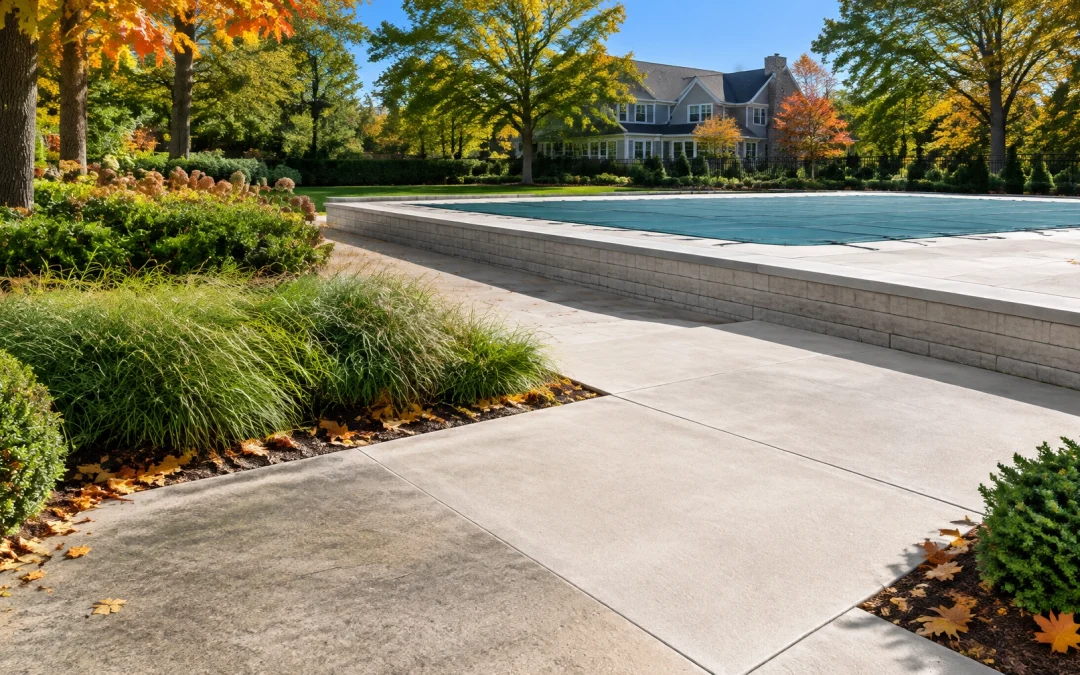
Welcome to your fall concrete maintenance checklist. Before winter weather arrives, look beyond the driveway: patios, walkways, pool decks, stoops, steps, and retaining walls all collect organic growth and dirt that can be harder to address after freezing temperatures set in.
For Long Island homeowners, concrete cleaning in October is a practical way to remove seasonal buildup, spot surface problems, and prepare outdoor areas for winter. It is not a substitute for concrete repairs, but it can make surfaces easier to inspect and help limit the contaminants left behind as conditions change.
What fall leaves on concrete
Concrete is porous, so debris and moisture can linger on its surface. After a humid summer and early fall, inspect shaded and low-traffic areas as well as the places your household uses every day.
- Leaf tannins: Wet leaves can leave brown or amber marks, especially when they sit on porous or unsealed concrete.
- Algae, moss, and mildew: Shaded sections that stay damp can develop green or dark organic buildup. Growth can also make steps and walkways slippery.
- Soil and tracked-in dirt: Foot traffic can carry garden soil, mulch, and fine debris onto patios and paths.
- Salt and sand residue: Material tracked home from roads and sidewalks can accumulate near entrances. Deicers and sand used during winter may add to that buildup.
- Cracks and surface wear: Existing cracks, flaking, or areas where water collects deserve attention before the slab goes through repeated wet and freezing conditions.
Freezing water can expand in cracks and contribute to further deterioration. Cleaning does not prevent freeze-thaw damage or repair a compromised slab, but it removes surface buildup and makes cracks, drainage issues, and wear easier to see.

Why clean patios, paths, and pool decks in fall?
Early-to-mid October can offer a useful window to schedule concrete cleaning on Long Island. Temperatures are generally more favorable for washing and drying than they are once winter conditions arrive. Booking ahead also gives you a chance to prepare outdoor spaces before leaves accumulate and freezing weather makes scheduling less predictable.
Different surfaces need different checks:
- Patios: Move planters and furniture where possible. Check under them and along the house, garden beds, and expansion joints for trapped leaves or damp buildup.
- Walkways: Look closely at shaded sections, low spots, and the path from the yard to the entrance. Dirt, algae, and moss can affect traction.
- Pool decks: Remove leaves and organic residue, and make sure the cleaning approach is appropriate for the deck’s finish. Keep pool water and equipment protected from cleaning products and runoff.
- Stoops and steps: Pay attention to tread surfaces, edges, and landings. Avoid directing a concentrated spray into cracks or joints.
- Retaining walls and stamped concrete: Check for loose sections, coatings, color treatments, or decorative finishes. These may call for lower pressure or a different method.
Fall cleaning is also a chance to decide what needs a contractor’s attention before winter. If you find significant cracking, scaling, loose material, or poor drainage, ask a qualified professional about repairs. Washing alone will not correct those conditions.
Pressure washing or soft washing?
The right method depends on the concrete’s condition and finish. Pressure washing uses water force to remove soil and residue. Soft washing relies more on a compatible cleaning solution and low-pressure application and rinsing. A professional may combine approaches on one property.
Sound, uncoated poured concrete may be suited to controlled pressure washing. A surface-cleaning tool can help wash large flat areas evenly, while a wand may be used carefully around edges and steps. More pressure is not automatically better. A concentrated spray can etch concrete, expose aggregate, leave stripes, or damage joints.
Stamped or colored concrete, coated surfaces, older or damaged slabs, and some pool decks may need a gentler approach. Identify the finish before cleaning, test an inconspicuous area, and follow product directions. For background on how these methods differ, see JMS Pressure Wash’s guide to soft washing vs. pressure washing.
Handling mold, mildew, and algae
Water pressure can remove visible growth, but water alone may not address organic residue effectively. A surface-appropriate cleaner, applied and rinsed according to its label, may help treat the buildup before the rinse. Use care around plants, metal fixtures, pool water, and nearby materials. Never mix cleaning chemicals.
Not every dark mark is mildew, and not every stain will disappear with washing. Leaf tannins can penetrate porous surfaces. A concrete-safe treatment may improve the appearance, but older stains can remain. Avoid trying to remove them with an aggressive nozzle; damaging the surface can make it rougher without solving the stain.
The National Park Service’s guidance for historic masonry emphasizes testing and beginning with gentle methods. While historic masonry is not the same as every residential concrete slab, the principle is useful: identify the material and condition before choosing how to clean it. Read Keeping It Clean: Removing Exterior Dirt, Paint, Stains and Graffiti from Historic Masonry Buildings.

Prep outdoor concrete before winter
Take these steps before a cleaning appointment or a do-it-yourself wash:
- Clear loose debris. Sweep or blow leaves, sand, soil, and small branches away from the slab and drains.
- Move patio items. Relocate furniture, planters, rugs, and stored pool accessories so the surfaces beneath them can be checked.
- Identify the finish. Note whether the concrete is plain, stamped, colored, sealed, coated, or next to pavers or stone.
- Flag problem areas. Point out cracks, loose joints, flaking, stains, and sections where water pools.
- Plan for winter traction. Follow deicer labels, use only what is needed, and remove excess sand when conditions allow. New York Landmarks advises against ammonium nitrate and ammonium sulfate deicers because they can damage concrete and masonry. See Don't Salt Your Steps: Winter Technical Tips.
- Allow time to dry. Schedule cleaning when weather and temperatures permit the surface to dry before freezing conditions. If considering sealer, ask whether the concrete is suitable and follow the product manufacturer’s temperature and moisture requirements. Sealer is a separate treatment, not a repair.
The Federal Highway Administration also discusses concrete pavement distress related to freeze-thaw conditions and deicing chemicals in its resource on chemical deicers and concrete pavement. For homeowners, the practical takeaway is to use deicers carefully and address visible defects rather than assuming cleaning alone protects the slab.
When to book a professional concrete cleaning service
Book while outdoor temperatures still allow the cleaning process and drying time your surface requires. There is no single date that works for every Long Island property, so consider the forecast, surface condition, shade, and the service provider’s schedule. If you have a pool deck or decorative concrete, mention the finish when requesting an estimate.
A professional service typically starts by reviewing the surface type, size, condition, access, and buildup. The cleaning method should match the material: pressure for suitable, sound concrete, or a lower-pressure approach for more delicate finishes. Ask how the company plans to treat algae or mildew, protect nearby landscaping, manage runoff, and handle pool areas. Confirm what is included in the quote and whether sealing or repair work is separate.
JMS Pressure Wash lists patios, sidewalks, pavers, and pool surrounds among the surfaces it serves. Review its Nassau County power washing services and power washing photos for more information. Service availability and the recommended cleaning method can depend on your location and surface condition.
Book before the first freeze
A clean patio, walkway, pool deck, stoop, or retaining wall is easier to inspect and ready for seasonal use. Remove leaves and surface buildup now, then address any cracks or drainage concerns before winter conditions arrive.
To discuss your surfaces and request a no-obligation estimate, contact JMS Pressure Wash or request a free quote. Book before the first freeze so there is time to clean and let the concrete dry.