October is a practical time to book commercial pressure washing for Long Island properties. A fall cleaning can remove accumulated grime before winter weather, salt, and holiday traffic add to it. It also gives property managers time to coordinate access, tenant notices, and safe drying conditions.
There is no single first-freeze date for Nassau and Suffolk County. Conditions vary by location and year, so monitor local forecasts and schedule work for a suitable above-freezing window. The National Weather Service’s growing-season information offers regional context, but it is not a guarantee against an earlier freeze.
Why book commercial pressure washing in fall?
Milder weather can make scheduling easier. October often offers workable daytime conditions for exterior cleaning. The contractor still needs to confirm the forecast and allow surfaces to drain and dry before temperatures fall.
Biological growth slows as temperatures drop. Algae, mildew, and other organic buildup on shaded areas can remain visible through winter. Removing it in fall can help keep entrances and facades presentable.
Clean before salt and ice season. Winter deicers and slush can add residue to concrete, curbing, and entryways. Cleaning beforehand removes existing grime and gives you a clear baseline for winter maintenance.
Prepare for holiday traffic and lease activity. Retail centers, restaurants, office buildings, HOAs, and multi-unit properties may see increased visitor traffic, tenant showings, or events. Cleaning high-use areas before those periods can improve first impressions.
What commercial pressure washing can include
A commercial cleaning scope should match the surfaces, access needs, and daily operations at your property. Ask for an area-by-area estimate rather than assuming every exterior surface should receive the same treatment.
Building exteriors and tenant frontage
Facades may include brick, masonry, stucco, EIFS, painted surfaces, siding, and storefronts. Delicate or coated materials often need soft washing or another low-pressure method. Higher pressure can damage finishes or force water into vulnerable areas.
Ask the contractor to identify the surface types, note any visible damage, and select an appropriate method. Tenant signage and awnings may also need careful cleaning. Confirm how the contractor will protect lights, cameras, doors, windows, and nearby landscaping.
Sidewalks, entryways, parking areas, and curbing
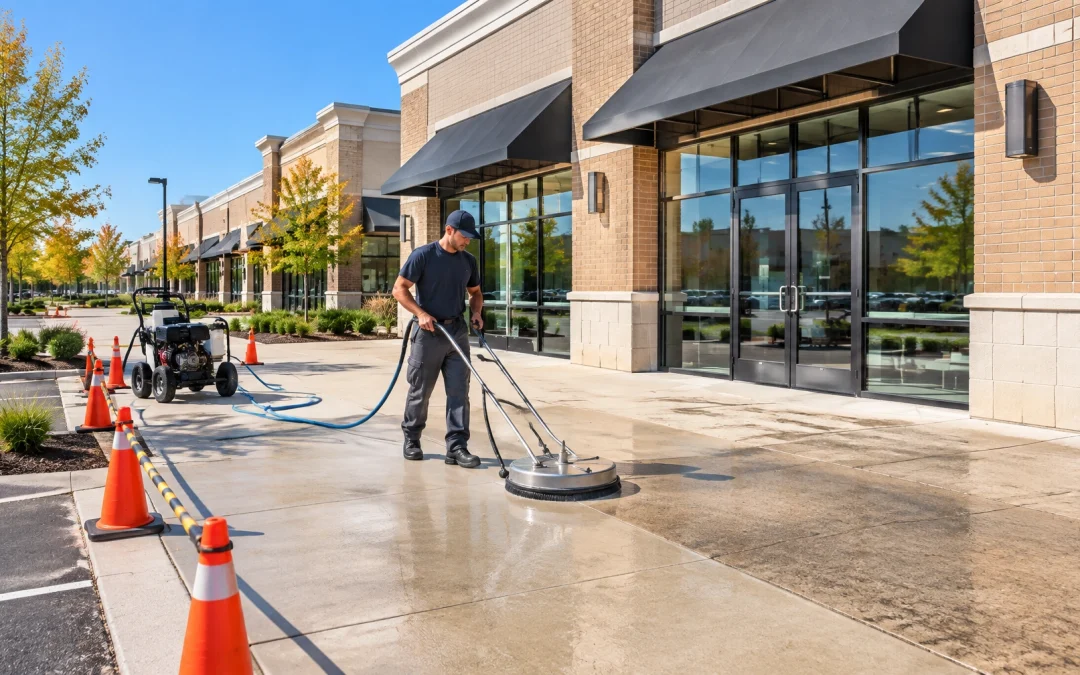
Walkways, ramps, steps, plaza areas, parking lots, and curbing collect foot traffic, leaves, tire marks, and general soil. Include the busiest paths first, such as main entrances, accessible routes, storefront approaches, and pedestrian crossings.
Cleaning does not repair cracked, settled, or spalled concrete. Ask the contractor to point out surface issues that may need a separate repair before winter.
Dumpster pads, loading docks, and drive-thrus
Back-of-house areas can accumulate grease, food residue, gum, and debris. Include dumpster pads, loading zones, service lanes, and restaurant drive-thrus in the scope where needed. These areas may require more time, separate access arrangements, and specific plans for managing wash water.

Patios and other customer areas
Restaurant patios, shared residential seating areas, and outdoor gathering spaces can collect stains and organic buildup through the warm months. Include them if they are part of the property’s common areas or tenant-facing presentation.
JMS Pressure Wash lists business properties among the areas it serves through its Nassau County power washing service. For examples of available work, visit the JMS Pressure Wash photos page.
What property managers should check on a walk-through
Walk the site before requesting a quote. Take photos and mark the priority areas on a simple property map.
- Identify the highest-use areas. Check main entrances, sidewalks, storefront edges, ramps, drive-thrus, loading zones, and shared patios.
- Look for buildup. Note visible gum, grease, algae, mildew, bird residue, and tire marks. Identify any areas that need extra attention.
- Check surface condition. Record loose coatings, cracked concrete, open joints, damaged paint, and settled pavement. Cleaning will not correct these defects.
- List sensitive features. Mark electrical outlets, cameras, door hardware, tenant signs, awnings, HVAC equipment, and landscaping that need protection.
- Plan around operations. Note delivery hours, busy periods, tenant access requirements, and areas that cannot be blocked at the same time.
- Ask about wash-water handling. Identify nearby storm drains and discuss how runoff and any cleaning solutions will be managed. NYSDEC explains wastewater and stormwater permit requirements. Requirements can depend on the work and discharge location.
A walk-through also helps you identify pedestrian hazards before scheduling. OSHA requires walking-working surfaces to be maintained in a safe condition and hazards to be addressed. Review the relevant OSHA walking-working surface requirements as part of your site-safety planning.
How to schedule and prepare before winter
- Request a site-specific quote. Send the property address, approximate areas, surface types, and photos of priority spots. Use the JMS Pressure Wash quote form to request an estimate.
- Confirm the cleaning method and scope. Ask which areas are included, how delicate surfaces will be cleaned, and what is excluded. Confirm whether gum or grease removal, tenant signage, awnings, and back-of-house areas are included.
- Set site logistics. Notify tenants, schedule around deliveries and customer peaks, and arrange to move vehicles or outdoor furniture. Agree on access, work sections, pedestrian routing, and reopening time.
- Check the weather before work begins. Confirm that temperatures and conditions allow the cleaned surfaces to drain and dry without creating an ice hazard. Reschedule if freezing conditions are likely during or soon after the work.
- Complete a closeout walk-through. Review the cleaned areas, note any stains that remain, and record damage or repair needs for winter planning.

Book before the winter calendar tightens
For property managers, fall cleaning is easiest to coordinate before snow and ice operations take priority. Plan the work around tenants, deliveries, pedestrians, and the forecast. Prioritize public-facing entrances and high-use service areas, then add facades, parking areas, patios, and other surfaces as budget and access allow.
Request a quote from JMS Pressure Wash before winter scheduling fills up. Include your property location in Nassau or Suffolk County, the areas you want cleaned, and any access or tenant requirements.