If you are seeing black streaks on your roof in Nassau or Suffolk County, they are often caused by blue-green algae, not ordinary dirt. A professional roof cleaning service can address the staining with a method suited to asphalt shingles. Before winter, the important steps are to identify the growth, avoid damaging washing methods, and choose a suitable weather window.
What causes black streaks on Long Island roofs?
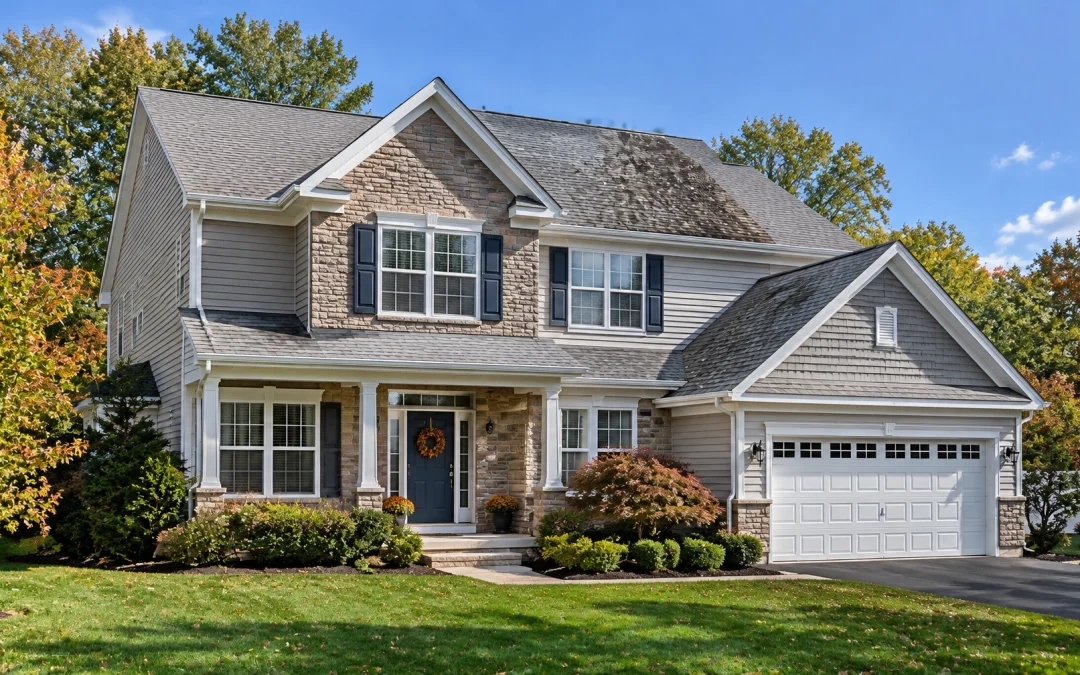
The dark staining on many asphalt shingle roofs is commonly associated with Gloeocapsa magma, a type of blue-green algae. Its protective dark coating helps shield it from ultraviolet light. As the growth spreads, small spots can develop into visible streaks.
Algae spores travel through the air and can settle on nearby roofs. Long Island’s humid coastal conditions can support growth, especially where moisture lingers. North-facing or shaded roof sections often get less direct sun and may stay damp longer. Trees can add shade and drop debris that holds moisture against the roof.
The distinction between algae and other growth matters. According to the Asphalt Roofing Manufacturers Association (ARMA), algae mainly affects roof appearance, while moss can lift shingle edges and contribute to water-related problems. Lichen can also attach firmly to roofing surfaces. A roof inspection can help determine whether staining is the main issue or whether growth and roof condition require a different response.

Why soft washing is preferred for asphalt shingles
Asphalt shingles have a surface layer of mineral granules. These granules help protect the shingle. High-pressure washing can dislodge them, wear the surface, and force water where it does not belong. Damage may not be obvious from the ground.
ARMA advises against pressure washing asphalt shingles. GAF’s technical bulletin on algae staining also warns that power washing may dislodge granules and contribute to premature shingle failure.
Soft washing uses an appropriate cleaning solution applied with controlled, low pressure. It relies on the cleaning treatment rather than a forceful water jet. The exact procedure should follow the shingle manufacturer’s guidance and account for the roof’s condition. Scrubbing shingles with a brush or broom is not a safe substitute for high pressure.
A responsible provider should explain the method before work begins. Ask what solution will be used, how it will be applied, and how plants and nearby surfaces will be protected. If a company proposes pressure washing an asphalt-shingle roof, ask for a different method or choose another provider.
Why consider cleaning before winter?
A mid-October evaluation gives homeowners time to plan before colder weather limits safe access and suitable working conditions. The goal is not to rush a job into freezing weather. Cleaning and rinsing should take place only when conditions allow the work to be completed safely and the roof to drain without freezing.
There are several practical reasons to address a roof before late fall:
- Manage moss and debris. Moss and leaf buildup can hold moisture. Moss may lift shingle edges, so have it assessed rather than scraping it off.
- Improve the roof’s appearance. Removing algae staining can make the roof look more uniform. That can help the overall presentation of a home before the holiday season.
- Support maintenance records. Keep the service scope, invoice, and photos with your home records. If an insurer or prospective buyer asks about roof condition, documentation may help explain the maintenance performed.
- Spot issues earlier. A cleaning visit may reveal visible concerns that need attention from a roofer before winter storms.
Cleaning is not a repair, a roof-life guarantee, or a way to prevent every leak or ice dam. Algae staining alone does not establish that a roof is failing. ARMA notes that algae is primarily an appearance concern, while moss can present a different maintenance issue. If shingles are brittle, missing, badly worn, or leaking, consult a qualified roofing contractor before scheduling cleaning.

What a professional roof cleaning service should include
The scope can vary by provider and roof condition. Before booking, ask the company to explain what it will and will not do. A thorough service discussion should include:
- Roof and material review. Confirm that the roof is asphalt shingle and discuss visible damage, loose shingles, flashing concerns, or heavy granule loss.
- Soft-wash method. Get confirmation that the company will not use a pressure washer or abrasive scrubbing on the shingles. Ask how its procedure follows the shingle manufacturer’s instructions.
- Property protection. Ask how the team will protect landscaping, siding, windows, painted surfaces, and other areas that could be affected by runoff.
- Debris and drainage plan. Clarify whether roof valleys, gutters, or downspouts are part of the work. Do not assume they are included in a roof wash.
- Safety and documentation. Ask how workers will access the roof safely and whether the company carries appropriate insurance. Request a written scope and ask whether before-and-after photos are available.
A cleaning contractor can point out visible concerns, but should not present cleaning as a substitute for roofing repairs. For lifted shingles, leaks, flashing problems, or other defects, arrange a roofing inspection.
Check warranty guidance before authorizing work
Some shingle manufacturers specifically warn against pressure washing. Warranty terms also vary by product, installation, and coverage period. Before cleaning, locate the shingle brand and product information if possible. Review the warranty and manufacturer’s current care instructions. Contact the manufacturer or original installer if you are unsure whether a cleaning method could affect coverage.
Do not assume a warranty requires routine cleaning. Do not assume every warranty covers algae staining. Check the actual terms for your roof.
When to schedule in late fall
Book an assessment before the first freeze becomes a regular risk, but let the forecast guide the work date. The roof and surrounding surfaces can become slippery during treatment. If freezing temperatures, ice, or unsafe access are expected, postpone the job.
The same caution applies to very late-season requests. A qualified provider should be willing to reschedule when weather conditions make application, rinsing, drainage, or worker safety unsuitable. Avoid climbing onto the roof to inspect or clean it yourself.

Request a roof cleaning estimate
If you have noticed black streaks, moss, or lichen, start by asking for an assessment and a written description of the proposed cleaning method. Confirm that the provider will use low pressure on asphalt shingles, protect the property, and follow the manufacturer’s instructions.
JMS Pressure Wash serves Long Island homeowners. Visit the soft washing versus pressure washing guide, request a quote, or contact JMS Pressure Wash to discuss your property. Call 516-667-8110 with questions about timing and service scope.