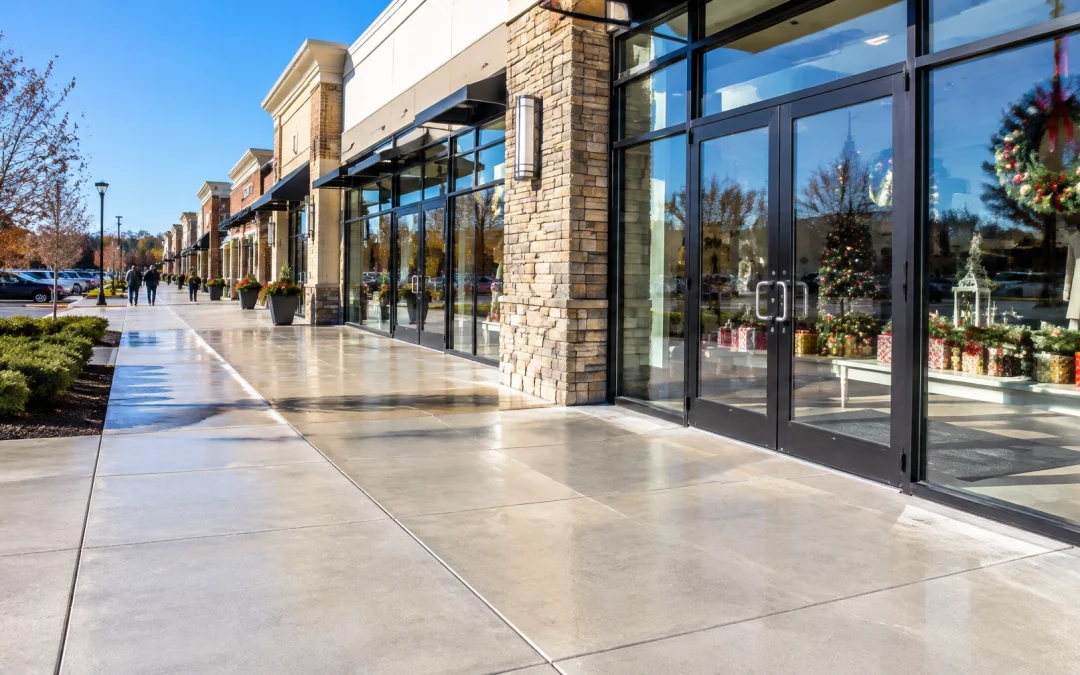
From early November through New Year, stores, restaurants, offices, and service businesses see more customer activity. Customers notice the approach to your entrance before they step inside. Grease near a restaurant door, gum on the sidewalk, or a dirty storefront can affect how well-maintained the property appears.
A planned round of commercial pressure washing can address high-traffic exterior areas before the holiday rush. It can also help remove buildup that may make wet surfaces slick or stain porous materials. Start planning before the November scheduling crunch, and arrange work for a time that does not interfere with customers, staff, or deliveries.
Where holiday traffic leaves its mark
The busiest areas are not always the ones that receive routine attention. Walk your property from the customer entrance to the service areas. Check:
- Entrance sidewalks and walkways: Gum, drink spills, food residue, leaf debris, mud, and tire marks can collect where people enter and cross the property.
- Storefront glass and entry surrounds: Door frames, thresholds, nearby concrete, and lower wall sections collect hand marks, splashback, and tracked-in grime. Glass needs appropriate cleaning rather than a direct high-pressure spray.
- Dumpster pads and service alleys: Food oils, grease, leaks, and residue can build up around restaurant waste containers and collection points.
- Drive-thrus and loading zones: Exhaust soot, diesel film, tire marks, and oil may collect where vehicles idle, turn, and unload.
- Parking lot islands and curbs: Leaves and mud from tree-lined lots collect at edges and around landscaped islands. Road salt can begin to appear near entrances as temperatures fall.
- Facades, awnings, and signage: Humid coastal conditions, pollen, and organic film can leave visible buildup on building surfaces. Signs and awnings also need a method suited to their material.
- Patios and outdoor dining areas: Food and drink spills, tracked-in debris, and grease can accumulate around tables and restaurant doors.

Why routine cleaning matters
Support safer walking areas
Grease and algae film can make wet concrete slick. Leaves, mud, and other debris can also create hazards or conceal uneven areas. Cleaning can remove some surface buildup, but it does not repair cracked or raised concrete. Inspect walking areas and arrange repairs where needed.
Maintain the customer’s first impression
Customers see the sidewalk, storefront, entry, and parking area before they see your products or service. Clean, maintained surfaces help present the property as cared for. This matters for retail shops, restaurants, offices, multi-tenant plazas, and other customer-facing businesses.
Protect surfaces from avoidable buildup
Concrete is porous. Grease and oil can penetrate it and leave stains that become difficult to remove. Organic film can affect the appearance of facades and awnings. Cleaning can help manage buildup, but it cannot prevent all wear or restore faded paint.
Schedule around business operations
The pre-holiday period is a busy time for customers and property teams. Book early. Plan work before opening, overnight, or during another agreed off-hours window. Confirm access, water availability, deliveries, and tenant needs in advance.
Weather also affects scheduling. Discuss temperature and drying conditions with the contractor. Work may need to move when conditions are near or below freezing, or when surfaces cannot dry safely before customers return.
What a professional commercial cleaning visit involves
A commercial cleaning job should start with a walkthrough. The contractor and property representative can identify each area, note the surface type and condition, and agree on the scope. Include customer routes, service areas, drains, landscaping, and locations that need restricted access.
The cleaning method should match the surface:
- Dumpster pads and drive-thru lanes: Hot water and an appropriate degreaser may help address grease and vehicle residue.
- Facades, awnings, painted surfaces, and EIFS: Soft washing uses low pressure and a surface-appropriate cleaning solution. Direct high pressure may damage delicate materials.
- Large concrete areas: A rotary surface cleaner can help clean flatwork consistently.
- Entryways and signage: Careful hand work can help limit spray near glass, doors, lettering, fixtures, and other sensitive details.
For more on how methods differ, read Soft Washing vs. Pressure Washing.

Before work begins, confirm how the crew will protect plants, direct foot traffic, and manage water. Wash water and runoff handling should be discussed with the contractor, especially around dumpster pads, drive-thrus, and areas with grease or oil. Local requirements vary by municipality and sewer authority. Nassau County provides information about illicit discharges; Suffolk County’s Sanitary Code Article 7 addresses waste discharges. Ask how runoff will be contained and handled for your specific property.
A property manager can also request basic job documentation. This may include the areas completed, before-and-after photos, access or surface issues observed, and any agreed runoff-handling notes. Keep those records with the property’s maintenance files.
For busy sites, consider a recurring schedule rather than waiting for visible buildup to return. A pre-holiday cleaning can be followed by spot cleaning or additional visits based on foot traffic, food service, weather, and the condition of the surfaces.
Walk your property: a practical self-check
Use this list before requesting an estimate:
- Walk the main customer route from the parking area to the entrance.
- Note gum, grease, food spills, algae, leaf debris, and muddy areas.
- Check door surrounds, lower facade sections, awnings, and signage.
- Inspect dumpster pads, service alleys, drive-thru lanes, and loading zones.
- Look at curbs and parking lot islands where leaves and mud collect.
- Identify storm drains, access points, landscaping, and areas that need protection.
- Photograph problem areas and note access limits or delivery hours.
- Estimate the square footage of concrete or other flatwork to be cleaned.
- List preferred work hours and dates when the property will be less busy.

Set realistic expectations
Cleaning can improve the appearance of many exterior surfaces. It cannot guarantee that every stain will disappear. Some staining, gum ghosts, and oil shadows may remain after cleaning. Deep discoloration may require additional treatment, and some marks may be permanent.
Faded or peeling paint may need repainting. Worn concrete may need repair or sealing. A cleaning is not a repair, and it does not correct drainage issues, cracks, or surface failure.
Request a free quote from JMS Pressure Wash
Plan your cleaning before holiday foot traffic peaks. Visit the JMS Pressure Wash quote page to request a free estimate.
When you contact JMS Pressure Wash, mention your property type, the approximate square footage of flatwork, and your preferred service hours. Include the areas you want assessed, such as storefront sidewalks, restaurant service areas, drive-thrus, loading zones, facades, or patios. That information helps scope the work and discuss a schedule that fits your business.